Topic 8 – Cross-Curricular Coding & Gaming in Education
Coding & Computation
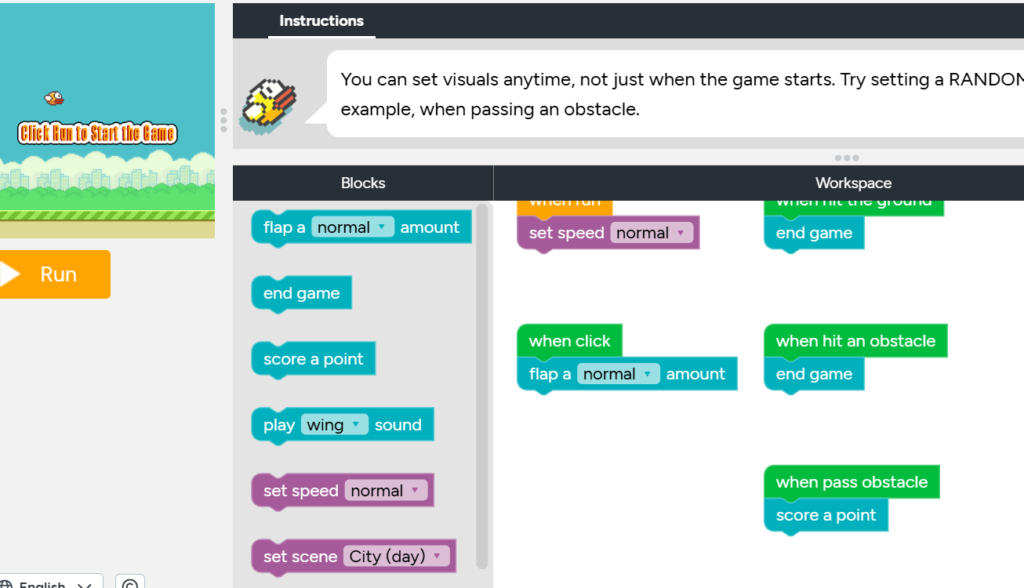
My subject areas are math and physics, and coding & computation is something that was integral to my success in the physics program at UVIC. I think that introducing coding to high school students in these subjects is an awesome way to give them a jump start if they plan on going off to a university science program. I think that these block-coding games, like shown below, are an interesting way to get students to think like a computer. But they are not very comparable to the type of coding they will be doing during first year and throughout university.
I had no experience coding (aside from creating excel formulas…if you count that as coding) before first year computer science and I really struggled to get the hang of things at first. I’m not sure that if I was introduced to games that involve block-coding earlier on if I would have been better off with the concepts. Python looks extremely different than the flappy bird game screenshot below.
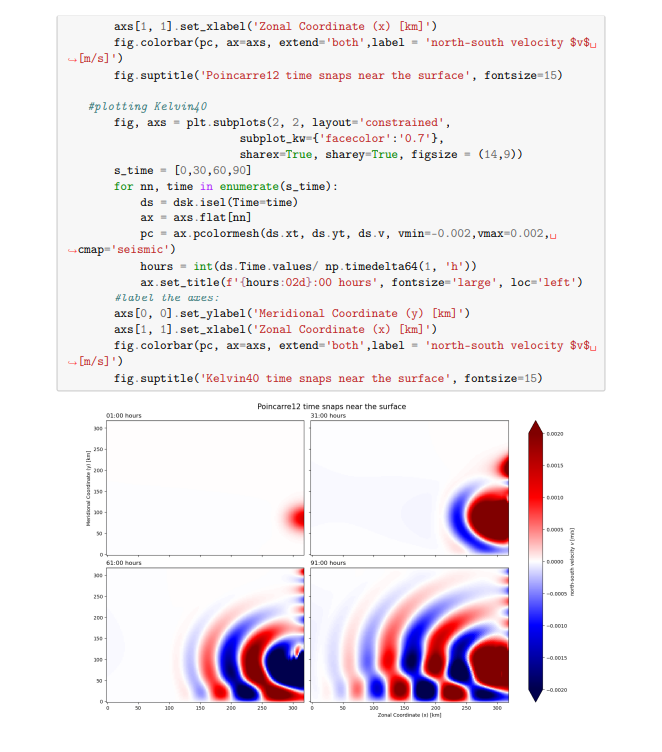
When I get the opportunity to teach physics to grade 11 or 12 I would love to teach the students excel skills for data analysis in order to speed up, and in some cases automate, the analysis process. Building calculated columns and producing graphs in excel is quite comparable to the building of formulas in a Jupyter Notebook (Python based coding software) for example.
On the other hand I think that the act of thinking computationally is beneficial for solving physics problems, so using these games in the early days to help develop that kind of thinking may improve the students ability to read a problem, pull out the important information, and solve the matching equation.
Gaming
Using games in the physics or math class are a fun way to build conceptual reasoning while receiving immediate feedback when changing variables. This allows students to understand what the equations/concepts (in both math and physics) really mean, and will therefore help them to use these equations/concepts appropriately and in future contexts as well.
There is a website online called PhET that contains many ‘game-like’ simulations that are built for different topics within the sciences. My high school teacher used these often and I always enjoyed getting to play around with the simulations, it felt like a video game but I was learning what the variables/equations/concepts actually mean!